





Different Types Of Composite Decking
If you’re searching for the types of composite decking, you’ve come to the right place. Composite decking comes in several varieties, each with unique advantages. This article breaks down the different types—hollow, solid, capped, and uncapped—so you can choose the best option for your outdoor space.
Key Takeaways
- Composite decking is made from recycled materials and offers durability, lasting 25-30 years without the maintenance issues of wood.
- The two main types of composite decking are hollow and solid; hollow is lighter and easier to handle, while solid is stronger and ideal for high-traffic areas.
- Capped composite decking requires little maintenance and is resistant to stains and UV rays, while uncapped is more budget-friendly but needs more upkeep.
Understanding Composite Decking
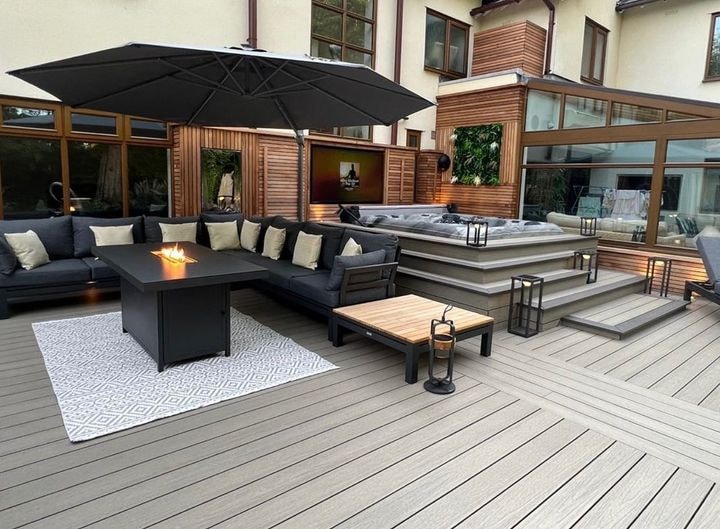
Composite decking is a revolutionary product made from wood-plastic composite deck boards. These boards are produced using recycled wood fibres and plastics, resulting in a durable and environmentally friendly material. This unique blend not only enhances the decking’s strength but also offers a sustainable alternative to traditional wood decking products.
One of the standout features of composite decking is its longevity. Unlike traditional wood decks, which may need replacing after a decade or so, composite decking can last between 25 to 30 years. This extended lifespan is due to its resistance to environmental factors such as rot, insects, and weathering.
Additionally, recent advancements have significantly improved the appearance of composite decking, with deep-embossed wood grain finishes that closely mimic the look of natural wood. This means you can enjoy the aesthetic appeal of timber decking without the associated maintenance headaches.
Hollow vs. Solid Composite Decking
When it comes to composite decking, you’ll encounter two primary composite decking types: hollow and solid. Knowing the differences between these types helps in selecting the right decking for your needs.
Hollow composite decking is generally lighter and easier to handle, while solid composite decking provides superior strength and stability. Each type has its own set of advantages and considerations, which we’ll explore in the following subsections.
Hollow Composite Decking
Hollow composite decking is a popular choice for many homeowners due to:
- Its lightweight nature makes the hollow boards lighter and easier to transport and handle.
- Ease of installation, facilitated by the hollow segments.
- The hollow core, which allows for the convenient running of cables and wires.
These features make it a versatile option for modern outdoor spaces.
However, hollow composite decking does have its drawbacks:
- It is cheaper and more common than solid boards.
- It tends to be more prone to damage.
- It may appear less authentic.
- These boards should have a wall thickness of at least 5mm to maintain structural integrity.
Despite these potential issues, hollow composite decking remains a cost-effective and practical option for many residential projects.
Solid Composite Decking
Solid composite decking, on the other hand, is known for its enhanced durability and long-lasting performance. Key features include:
- Denser and heavier boards
- Superior strength and stability
- Ideal for high-traffic areas and commercial settings
- Lifespan can extend up to 30 years
These qualities offer excellent long-term value for homeowners.
Solid composite boards also provide excellent impact resistance, staying intact under heavy use, thanks to their protective polymer shell. This makes them a reliable choice for outdoor installations that need to withstand significant wear and tear. Hard-wearing composite materials board.
While solid composite decking may be more expensive and challenging to install due to its weight, its superior durability and stability make it a worthwhile investment.
Capped vs. Uncapped Composite Decking
Another important consideration when choosing composite decking is whether to opt for capped or uncapped boards. A protective polymer layer on capped composite decking boosts its durability and resistance to stains and UV rays. In contrast, uncapped composite decking, while more budget-friendly, requires more maintenance and is less resistant to environmental factors.
Let’s delve deeper into the specifics of each type.
Uncapped Composite Decking
Uncapped composite decking is often chosen for its lower cost compared to capped alternatives, making it an attractive option for budget-conscious homeowners. These boards also offer a natural feel and traditional wood-like appearance, which can be appealing for those looking for an authentic outdoor aesthetic. However, it’s important to note that uncapped decking boards require regular maintenance and cleaning to keep them looking their best.
One of the significant drawbacks of uncapped composite decking is its vulnerability to damage from mould, mildew, and staining. These boards are also more prone to fading and require more upkeep than their capped counterparts.
Despite these challenges, the rough texture of uncapped boards can provide better slip resistance, making them a suitable choice for poolside installations.
Capped Composite Decking
Capped composite decking is designed with a protective co-extrusion layer that:
- Enhances its durability and stain resistance
- Makes the boards highly resistant to moisture, mould, and fading, ensuring they maintain their appearance over time
- Requires minimal maintenance, typically only needing occasional cleaning with soapy water
This makes it a convenient option for busy homeowners.
While capped composite decking generally comes at a higher price point, its long-term benefits often justify the cost. These boards are well-suited for high-foot-traffic areas due to their dense and structurally sound quality. Despite some concerns about the appearance of second-generation shielded composite decking, manufacturers are continually improving designs to create better-looking capped composites.
Grooved vs. Ungrooved Composite Decking
When selecting composite decking, another decision you’ll face is choosing between grooved and ungrooved boards. Grooved composite decking features side grooves that allow for installation using hidden clips, creating a seamless appearance without visible fasteners.
Ungrooved composite decking, on the other hand, typically has smooth edges and is fastened directly with screws or nails, which can affect the overall aesthetic.
Grooved Composite Decking
Grooved composite decking is designed for hidden fasteners, resulting in a sleek and modern look for your deck. These hidden fasteners create a seamless deck surface free from visible screws or nails, enhancing the overall aesthetic appeal. This type of decking is particularly popular for contemporary designs where a clean, uncluttered appearance is desired.
Grooved composite decking is easier to install and offers visual benefits. The hidden fasteners simplify the installation process, making it quicker and less labour-intensive. This can be a significant advantage for DIY enthusiasts and professional installers alike, ensuring a smooth and hassle-free installation experience.
Ungrooved Composite Decking
Ungrooved composite decking, while perhaps not as sleek in appearance, offers its own set of benefits. These boards are typically fastened using screws or nails from the top, which can create a more traditional aesthetic. This method of installation is straightforward and can be preferable for those who value simplicity and ease of use.
However, it’s important to choose matching coloured screws to maintain a cohesive look.
Benefits of Composite Decking
Composite decking offers numerous benefits that make it an attractive alternative to traditional wood decks. These include enhanced durability, low maintenance requirements, and environmental friendliness. Composite decking is resistant to rot and insect damage due to its mixed materials, which prevent moisture absorption.
Let’s explore these benefits in more detail.
Durability and Longevity
One of the primary advantages of composite decking is its durability. It offers:
- Resistance to damage from water and insects, significantly outlasting traditional wood
- Ability to withstand severe weather conditions
- Resistance to fading and mould
- Stability even in cold temperatures, contributing to long-lasting performance
Solid composite deck boards can even withstand the weight equivalent of more than four cars per square inch, highlighting their strength and reliability. This incredible durability makes composite decking a cost-effective choice in the long run, as it requires less frequent replacement and upkeep compared to other materials.
Low Maintenance
Another significant benefit of composite decking is its low maintenance requirement:
- Traditional wood needs regular sanding, sealing, and staining.
- Composite decking only requires occasional cleaning.
- Capped composite decking needs minimal maintenance, with spills and stains easily wiped off thanks to its protective polymer coating.
Cleaning composite decking is straightforward and typically involves just soap and water. This ease of maintenance makes composite decking an ideal choice for busy homeowners who want to enjoy their outdoor space without the hassle of constant upkeep.
Environmentally Friendly
Composite decking is also environmentally friendly, as it is made from recycled materials such as wood fibres and plastic. Using these recycled components, composite decking reduces waste and preserves natural forests. This eco-friendly aspect makes it a responsible choice for environmentally conscious consumers.
Despite being made from recycled materials, composite decking can still provide a stylish wood-like appearance and is available in various colours. This allows homeowners to enjoy the natural beauty of reclaimed wood without contributing to deforestation, making composite decking a sustainable option for modern outdoor spaces.
Choosing the Right Composite Decking for Your Needs
Selecting the right composite decking involves considering several factors such as budget, aesthetic preferences, and performance requirements. Knowing the different types of composite decking aids in making an informed decision that fits your needs.
Let’s dive into these considerations in more detail.
Considering Budget
Budget is often a crucial factor when choosing composite decking. While composite decking is generally higher in cost compared to traditional wood decking, it offers long-term value due to its durability and low maintenance requirements. The initial higher cost is attributed to additional man-hours, production processes, and the use of recycled materials.
The overall cost of building a composite deck can be influenced by several factors, including the size of the deck, the health of the substructure, and the type of decking chosen. Additionally, the complexity of the design can increase labour costs. Despite these considerations, the long-term savings on maintenance and replacement make composite decking a cost-effective choice. Using a decking calculator can help you estimate the materials needed for your project.
Aesthetic Preferences
Aesthetic preferences play a significant role in choosing the right composite decking. Many consumers prefer an authentic wood look and excellent colour retention in their decking. Natural wood colours available for composite decking include:
- Teak
- Oak
- Walnut
- Antique
Composite decking often features reversible designs, allowing users to choose between different surface textures for versatility in appearance. For example, brushed composite decking has a brushed surface that provides richer, sharper colour. Additionally, choosing contrasting colours for decking boards allows for creative designs like borders or patterns.
Performance Requirements
Performance requirements are another essential consideration. Solid composite decking is denser and heavier, making it suitable for heavy-duty applications and commercial settings. Composite decking typically has a maintenance interval that is five times longer than traditional lumber, making it a practical choice for long-term use.
Composite decking products are engineered to resist weathering, fading, staining, mould invasion, and mildew, making them moisture-resistant. These properties make it an excellent choice for outdoor spaces exposed to various weather conditions and decking material, including composite decking boards.
Additionally, composite decking requires minimal upkeep, as it does not need sanding, painting, sealing, or varnishing.
Summary
Composite decking has transformed outdoor living by providing a durable, low-maintenance, and eco-friendly alternative to traditional wood decking. By understanding the various types of composite decking—whether it’s hollow vs. solid, capped vs. uncapped, or grooved vs. ungrooved—you can make an informed decision that suits your specific needs and preferences. The benefits of composite decking, including its longevity, ease of maintenance, and eco-friendliness, make it a worthwhile investment for any homeowner. So, are you ready to take your outdoor space to the next level with composite decking?
Frequently Asked Questions
Composite decking is primarily made from a mix of recycled wood fibres and plastic, resulting in a strong and environmentally friendly option for your outdoor space.
Hollow composite decking is lighter and less durable, while solid composite decking is denser, offering better strength and is ideal for high-traffic areas. If you need durability, go for the solid option!
Choosing capped composite decking is smart because it offers better durability and stain resistance with less maintenance. While uncapped options may save you money upfront, the added long-term care can make capped the more economical choice overall.
If you’re looking for low-maintenance, composite decking is definitely the way to go! Unlike traditional wood, it doesn’t need sanding, sealing, or staining—just a quick wash with soapy water now and then.
Absolutely, composite decking is environmentally friendly because it’s made from recycled materials, which reduces waste and helps protect our forests. It’s a great choice for those looking to go green in their outdoor spaces!
