





Your Ultimate Guide To Balustrades
Whether on a deck next to a static caravan, on a modern balcony or on an external staircase, a balustrade is a practical architectural feature that combines safety with visual appeal. It helps to protect people, defines the boundaries of the space and enhances the visual finish of the project. At the same time, choosing the right one also makes a difference in terms of maintenance, durability and the final appearance of the installation.
Balustrades feature in many types of projects, including homes, holiday homes, lodges, park homes, terraces, balconies and decking areas. As decorative elements as well as safety features, they now come in various materials to suit different architectural styles and practical needs. At Maple Plastics, this connection with outdoor living is central, as the company specialises in low-maintenance solutions for outdoor spaces and offers a full range of balustrade systems to meet real needs for style and performance.
What is a Balustrade?
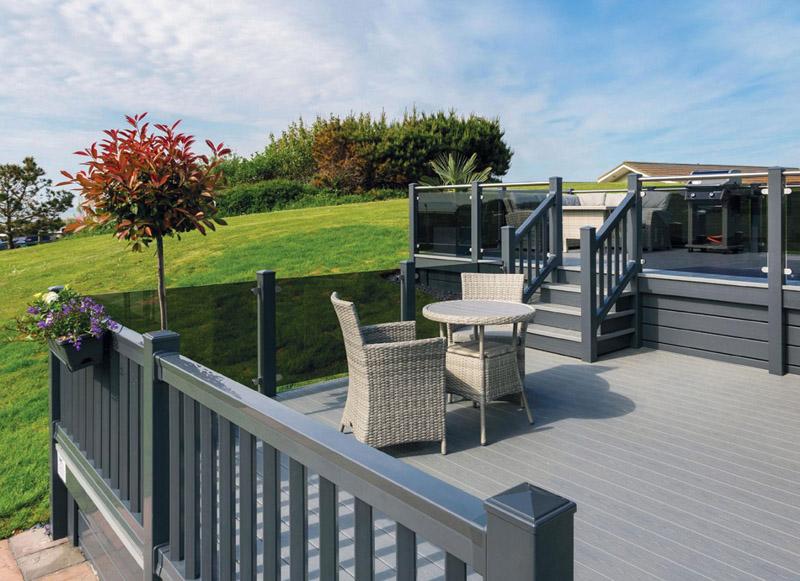
A balustrade is a protective structure used in elevated areas or where there is a change in level. The word ‘balustrade’ comes from the Italian word ‘balausta’, referring to the wild pomegranate flower, because the shape of the baluster was thought to resemble the flower’s bud. It can be installed on stairs, balconies, terraces, raised platforms and decking areas to help prevent falls and ensure safety. In the classical architectural definition, a balustrade is the complete assembly, typically consisting of a handrail, vertical elements or panels, and supporting posts.
Historically, this architectural element gained prominence in European architecture following the Renaissance, although the idea of decorative and protective barriers dates back much further. Ancient sculptural murals from Assyrian palaces are often cited among the earliest examples of this type of feature in architecture. Today, however, the balustrade is no longer merely a detail of classical architecture but a familiar feature in modern architecture, across both residential and commercial projects.
Balustrade, Balusters and Banister: What is the Difference?
The full balustrade is the complete structure, usually made up of the top rail, balusters, infill panels or spindles, and supporting posts. The term banister is widely used in everyday UK English and is also commonly spelled ‘bannister’; it usually refers to the handrail on a staircase, rather than the entire balustrade. A railing can describe a simpler barrier system, while a balustrade refers to the fuller assembly of rails, balusters or panels, and posts.
Why are Balustrades Important?
The primary function of a balustrade is to provide safety by helping to prevent falling from elevated areas. It may be installed on one or both sides of a staircase or along the edge of a platform, balcony or deck. Whenever there is a change in floor level, a raised area or an exposed edge, the structure helps to protect people, children and pets from accidental falls. This is fundamental, but it is far from being the only benefit.
Balustrades are also important because they reinforce the visual appeal and structural integrity of the design. Instead of looking like an unfinished or makeshift platform, the space takes on a clearly defined boundary and a more complete finish. Furthermore, the balustrade directly influences the aesthetic appeal of the environment.
Depending on the material, it can create a lighter, more contemporary, more traditional or more premium look. This explains why this element has become so popular on decks, verandas, caravan platforms and terraces. The aim is not simply to have a system that fulfils a function, but rather a solution that is safe, durable and attractive all at once.
Where Can a Balustrade be Used?
Many people still associate balustrades solely with the stair balustrade, but their use is much more widespread today. They can be found on internal and external stairs, balconies, terraces, verandas, garden decks, lodge structures, holiday park platforms and caravan sites. Where a staircase is fully enclosed by walls, a simple handrail fixed to the wall may sometimes be enough, rather than a full balustrade.
In some projects, the balustrade serves as the primary safety barrier. In others, balustrades also help to organise the space and enhance the visual appeal of the area. In projects with open views, for example, glass panels make a lot of sense because they provide protection without closing off the space.
In areas more exposed to the weather and frequent use, UPVC or stainless steel systems may be more suitable, depending on the desired look and the level of maintenance required. This is particularly relevant for caravan parks and decking installers, because in these cases the product needs to perform well on a day-to-day basis and remain presentable over time.
What are the Main parts of a Balustrade?
Although the design varies from one system to another, most balustrades include a few key components. The handrail is the upper section that follows the line of the structure and provides support. The balusters, spindles or glass panels fill the gaps between the supports, creating the barrier itself.
The base rail helps to support and align the system at the bottom. In many cases, support posts or newel posts are also used, particularly where the design needs extra rigidity or a change in direction. Not every balustrade needs to follow the traditional model with decorative columns. In more contemporary designs, the vertical posts can be far more discreet, the infill can be made of glass, and the result can be much cleaner visually. Even so, the objective remains the same: to create a stable, safe structure that is consistent with the rest of the project.
Different Styles: From Classic to Modern
Balustrades come in many different styles, and the right choice depends largely on the type of project and the property’s architectural style. Balustrade design has evolved over time, and today these design styles range from traditional to contemporary. More traditional options often feature wooden balustrades, turned spindles, and newel posts, with more prominent decorative detailing. In period or classically styled properties, this approach can still work very well.
There are also more ornamental options, such as a wrought iron balustrade, decorative metalwork and intricate designs that turn the structure into a visual focal point. On the other hand, in modern architecture, modern balustrades often use materials such as glass and stainless steel to create cleaner lines, better visibility and a lighter overall look.
This is where solutions featuring glass, stainless steel and UPVC come into play. Rather than creating visual weight, these systems tend to open up the space, improve light circulation and offer a more contemporary look. For decks, balconies and areas adjacent to lodges or caravans, this approach often makes even more sense because it combines style with low maintenance.
Which Materials are Most Commonly Used in a Balustrade?
When it comes to balustrades, the material makes all the difference, not only in terms of the final appearance but also in terms of strength, maintenance and durability. Common materials include glass, wood, metal, stone and other practical options for modern outdoor projects. These materials can be selected to suit different design priorities, levels of maintenance and architectural styles.
Wooden balustrades offer a classic, warm look, but they usually require more upkeep over time. Metal systems, including wrought iron, can add character and dependable structural support, while stainless steel suits cleaner, more contemporary schemes. Glass remains especially popular where light, openness and unobstructed views matter most.
Stone and concrete balustrades do exist, but they are usually associated with larger-scale or more traditional projects rather than the kind of modular outdoor installations that tend to interest decking installers and holiday park developments. Other materials, such as composite or aluminium-framed systems, may also be suitable in some cases, but for Maple Plastics the most relevant options remain UPVC, glass balustrade and stainless steel. These are systems that cope well with the UK climate, can deliver a compelling modern design and help reduce maintenance work over the years.
How to Choose the Right Balustrade for Your Project
Choosing the right balustrade should start with the actual use of the space. If the installation is to be in a coastal area or one that is highly exposed to rain, the material needs to withstand these conditions well. If the project is part of a caravan park or holiday lodge, low maintenance tends to be a major factor in the decision.
If the priority is to highlight the view, glass panels may be the best option. If the client wants something robust, clean and contemporary, stainless steel or UPVC may make more sense. Other materials may also be suitable depending on the property’s style and practical requirements. It is also worth considering the architectural style of the building. A balustrade does not need to draw all the attention to itself, but it should complement the deck, the façade and the overall lines of the space.
Requirements can also differ between a domestic property and a commercial property, so the right balustrade should always be chosen with safety, use case and compliance in mind. In some cases, the best result comes from a discreet system. In others, a more striking balustrade helps to complete the design and enhance its curb appeal. Ultimately, the ideal choice usually comes from a balance between style, support, safety, maintenance and overall design.
Regulations and Standards in the UK: What to Consider
When it comes to balustrades in the UK, it is not enough to consider appearance alone. Dimensions and safety requirements are also important. In England, Approved Document K is the primary reference for protection against falls, collisions and impacts. The document covers stairs, guarding, ramps and glazing.
Among the most important guidelines, the document specifies heights of 900 mm for flights in various situations and 1100 mm for balconies and roof edges in certain contexts. The same document also states that, in buildings that may be used by children under five years of age, a 100 mm sphere must not pass through the openings in the guarding.
This means that the balustrade must be considered a genuine safety system, and not merely as a decorative finish. If there is glazing, stairs, raised platforms or any doubts regarding application, the final decision must be confirmed with Building Control or with the professional responsible for the installation.
Balustrades for Caravan Parks and Decking Installers
The right balustrade can help caravan parks and decking installers deliver projects that look better, result in fewer callbacks, and offer a stronger value proposition to the end customer. In a market where aesthetics, safety and maintenance all matter equally, this is a significant advantage.
For holiday parks, lodges and caravan decks, materials such as UPVC and glass make a lot of sense because they offer a solid balance between performance and appearance. The decking retains a clean look, the area is safer, and maintenance tends to be simpler over time.
Why Choose Maple Plastics
Maple Plastics does not limit itself to a single type of balustrade or a one-size-fits-all solution. The company offers a wide range of products, including systems in UPVC, glass and stainless steel, as well as other items such as decking, skirting, gates, lighting and outdoor structures. This makes the brand particularly useful for those looking to complete a project in an integrated manner, without having to source parts from multiple suppliers.
Another strength is its very clear positioning around durability, low maintenance and suitability for the British market. The company works on modern homes, holiday homes, lodges, park homes and static caravans, and highlights nationwide delivery and support in choosing materials, colours and styles.
Summary
A balustrade is one of those elements that clearly combines function and design. It helps to protect people, creates a safe boundary in elevated areas and also influences the final look of the project. In some cases, the ideal choice will be a solution with glass panels to keep the view unobstructed. In others, it will make more sense to opt for UPVC for ease of maintenance, or for stainless steel to achieve a more modern and durable look.
The most important thing is not to treat the balustrade as a secondary detail. When the right system is chosen from the outset, the result tends to be better in terms of safety, style, durability and overall design. And when the project involves decking, holiday homes, lodges or caravan parks, this choice has an even greater impact on the performance and presentation of the space.
FAQ
A balustrade is a protective structure installed on stairs, decks, balconies, terraces and other elevated areas. Its main function is to reduce the risk of falling and to create a safe barrier.
A balustrade is the complete assembly. A banister is usually used to refer to the handrail or, informally, to the staircase structure.
Yes, especially when the design calls for a modern look and unobstructed views. Maple Plastics offers different styles, sizes and finishes of glass, including laminated glass.
Yes. This type of system is ideal for caravan decks, holiday parks and lodges, offering low maintenance, weather resistance and safety.
Often, yes. Balconies, verandas and raised platforms frequently require planning permission, although Juliet balconies and some very low platforms may be treated differently depending on the project and local rules.
No. Decking may fall under permitted development if it meets certain conditions, including a maximum height of 30 cm above ground level and a limit of 50% of the garden area when combined with other structures.
