





Understanding Composite Fencing And Applications
Composite fencing is no longer a niche option but has become an increasingly sensible choice for homeowners looking to enclose their garden, create more privacy and reduce maintenance throughout the year. Its appeal lies precisely in the combination that many homeowners are seeking: a wood-inspired appearance, more stable performance in outdoor environments and less reliance on paint, stain or frequent treatments. Composite fencing is a modern garden boundary solution designed as a low-maintenance, durable alternative to traditional timber fencing.
Understanding what composite fencing is today means looking not only at the material itself, but also at its applications. Fencing is no longer seen merely as a boundary between plots. It forms part of the design of the outdoor space, helps to organise living areas, enhances the sense of privacy and can complement other finishes, such as composite decking and composite cladding, to create a more cohesive look on the property’s exterior. In that sense, composite fencing today is as much a design decision as a practical one.
What is Composite Fencing?
Composite fencing is a fencing system made from composite materials, typically a blend of recycled plastic and reclaimed wood fibres. In practice, composite fencing uses these materials to offer the warm appearance of wood with lower maintenance and greater resistance to outdoor use, making it a modern, durable solution that is more predictable than natural timber in terms of appearance and maintenance requirements.
NewTechWood fencing is a high-performance solution made from recycled wood fibres and plastic, designed to complement gardens and homes with a more sophisticated finish. In practice, composite fence panels and composite fencing boards are used to create cleaner, more contemporary boundaries, and these fencing panels help create a more uniform finish without the overly plastic feel that many people associate with synthetic materials. The plastic component and wood content are engineered to support a more natural finish while keeping maintenance low, and the composite boards are designed to remain practical for day-to-day outdoor use.
This is because the composite has been developed to closely resemble the natural look of wood, with a natural wood finish that better captures the look of real wood and a more traditional appearance. Composite fencing is also available in a variety of colours and styles, which helps homeowners coordinate it with other exterior finishes while improving resistance to moisture, UV rays and day-to-day wear. This is why composite fencing is often used in projects where the client wants a more premium result, with less concern about frequent repairs and a reduced need for periodic maintenance.
How is Composite Fencing Made and Why Does It Matter?
When it comes to composite fencing designed for outdoor use, the key factor is the composition of the composite materials. NewTechWood’s UltraShield technology combines high-density polyethylene plastic with wood fibres and an outer polymer layer, whilst highlighting 95% recycled material and low maintenance as key features of the system. How composite fencing is made matters because that manufacturing process helps determine consistency, durability and day-to-day performance outdoors, and because composite fencing products can vary significantly in build quality.
The NewTechWood range supplied by Maple Plastics is manufactured using 95% recycled materials, including plastic bottles in the outer composite and wood fibre in the core. This manufacturing process matters because it determines the product’s day-to-day performance. In capped systems, the outer layer helps protect the product from weather exposure, which reduces the need for oil, sand or paint and improves visual resistance to stains and surface wear.
Rather than treating the fence as an element requiring almost annual maintenance, composite is purchased precisely because of the promise of a simpler and more predictable maintenance cycle. Another important point is that composite fencing materials do not require the same type of care as traditional timber fencing. UV stabilisers and pigments are integrated during manufacturing to help maintain colour consistency and reduce fading.
The system is presented as virtually maintenance-free, with boards that slide onto an aluminium frame and are designed to resist rotting, warping, cracking and insect damage. This helps explain why composite fencing offers such a strong proposition for gardens exposed to rain, damp and the seasonal fluctuations typical of the British climate.
Where Does Composite Fencing Work Best?
One of the major advantages of composite fencing is its versatility. In residential properties, it works very well as perimeter fencing, particularly when the priority is privacy, a uniform finish and low maintenance. It also makes sense in patio areas and garden seating areas, where fencing panels can cease to be merely a boundary and instead act as a visual backdrop for the outdoor space. Composite fencing offers a modern aesthetic with sleek lines and clean finishes, making it suitable for a range of garden designs from contemporary to traditional.
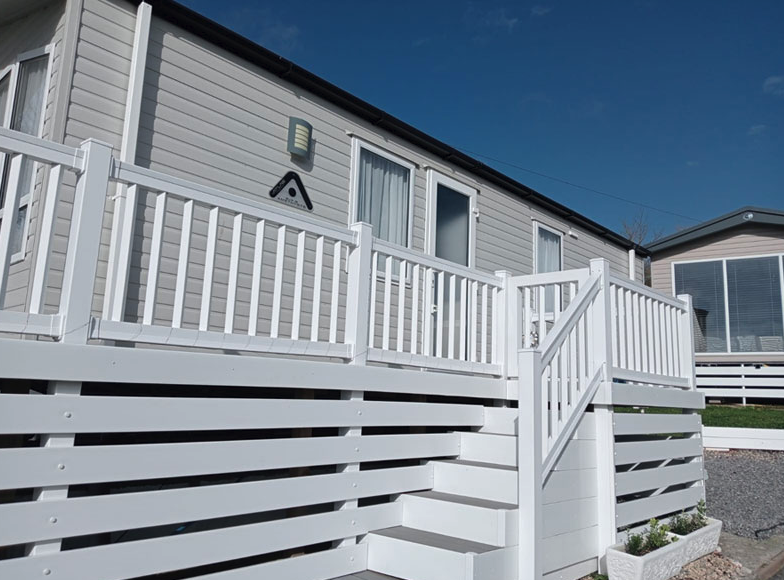
Maple Plastics’ approach clearly illustrates this logic when developing outdoor solutions for gardens, terraces, modern homes, holiday homes, lodges, park homes and static caravans. In more contemporary projects, composite panels and composite fence panels also serve to organise the space.
Rather than simply ‘enclosing’ the property, fencing can separate an outdoor dining area, protect a hot tub zone, create more visual privacy on one side of the plot, or enhance the architectural appeal of the garden. When the fencing complements decking, balustrades and wall cladding, the result tends to look more intentional and less improvised, which is important for homeowners who wish to enhance the overall aesthetic of the property.
There is also a natural fit in semi-commercial and hospitality applications, such as holiday accommodation, lodges and high-traffic areas. In such settings, the combination of a uniform appearance, simple cleaning and reduced reliance on regular maintenance makes an even greater difference, because the cost of keeping traditional timber in good condition tends to rise over time and with exposure. The minimal maintenance required makes composite fencing ideal for busy homeowners and high-traffic areas, as it resists common issues like rot and insect damage and only needs occasional cleaning without the need for painting or sealing.
Benefits of Composite Fencing
There are many benefits of composite fencing, but the main ones are clear: low maintenance, durability, a more consistent appearance and the use of recycled materials. In practice, composite fencing is designed to resist rot, decay and insect damage, which reduces the amount of upkeep usually associated with wooden fencing.
Maintenance
Composite systems are marketed as low-maintenance because they do not require the same cycle of painting, sealing or staining associated with traditional wood fencing. NewTechWood’s capped materials do not require oil, sand or paint, whilst Maple Plastics recommends simply cleaning its composite products with warm water, soap and a soft brush, with no need for regular painting or sealing. That minimal maintenance is one of the material’s strongest selling points.
Durability
Composite fencing is weather resistant and designed to cope better with outdoor weather conditions, including heavy rain. The product is resistant to rot, warping, cracking and insect damage, which reduces the need for repairs and maintenance compared with traditional wood fencing. Capped systems can also help improve stain resistance, fade resistance and colour consistency over time.
Aesthetic Appeal
For many buyers, the advantage of composite is not just that it lasts longer, but that it keeps the garden looking cleaner and more cohesive for longer. Composite fencing offers colour consistency across panels, helping to maintain a more uniform appearance over time. NewTechWood offers a natural look and feel in its fencing range, while composite more broadly appeals because it provides a practical wood-effect finish with a contemporary edge. That aesthetic appeal helps explain why composite boards and horizontal slats feature so prominently in garden refurbishment projects and exterior upgrades.
Environmental Considerations
Composite fencing is made from recycled plastic and reclaimed wood fibres, combining these composite materials to create a durable and more environmentally friendly product. Many composite fencing products use recycled materials, with the UltraShield range containing 95% recycled material and incorporating plastic bottles and reclaimed/recycled wood fibre into the product. Using recycled plastic and recycled wood in composite fencing helps reduce waste, making it a more environmentally friendly option than many buyers expect. This does not automatically make all composite fencing a perfect solution, but it does explain why the material is often marketed as environmentally friendly within the outdoor products sector.
Composite Fencing vs Traditional Timber Fencing
Timber still appeals to those looking for a very classic look or a lower initial cost, but it requires more regular maintenance and tends to suffer more from moisture, surface wear and loss of aesthetic uniformity over time. Traditional materials such as wood fencing and other wooden fencing options often have a lower initial price, but they also require more maintenance. Composite fencing, on the other hand, is marketed precisely as a solution to these issues.
In practical terms, this means less maintenance, less need for periodic finishing, and a more consistent appearance when used outdoors. This does not mean that composite fencing is always the cheapest option initially. In many cases, the initial investment is higher than that of traditional wood fencing, and that higher upfront cost should be considered alongside the product’s expected lifespan and maintenance profile.
The case for composite becomes clear in the medium and long term, with less repainting, fewer premature replacements due to rot or warping, and less time spent trying to keep the fence looking good after successive cycles of rain and sun. For homeowners seeking predictability and reduced maintenance, this reasoning often outweighs the upfront cost alone.
It is also worth noting that natural timber continues to hold aesthetic value and can perform well when properly maintained. Composite has gained ground because it offers some of the look that people like in timber, but with less reliance on ongoing maintenance, less risk of splintering, and better stability in outdoor applications.
What to Consider Before Choosing Composite Fencing in the UK
Before choosing composite fencing, it is best to consider the style of the project, the quality of the system and the context of the installation. In terms of style, it is worth considering whether the aim is complete privacy, a more decorative design, or a fence that complements other exterior finishes.
Regarding the quality of the system, it makes a difference to know whether the composite fencing boards have capped protection, what the intended structure is, and what kind of warranty the manufacturer offers. Installation quality is also crucial, because alignment, secure post holes where required, ventilation and allowance for thermal expansion all affect structural integrity and long-term performance.
Planning regulations also merit attention. In England, it is generally not necessary to apply for planning permission for a fence, wall or gate if it does not exceed 1 metre in height next to a highway used by vehicles, or the footpath of such a highway, and 2 metres elsewhere, provided the site is not a listed building, does not form a boundary with a neighbouring listed building or its curtilage, and is not subject to an Article 4 direction or planning condition removing those rights.
In Wales, the same broad 1-metre and 2-metre limits apply, with similar restrictions where rights have been removed or where listed-building circumstances apply. In Scotland, permitted development for a house generally allows up to 2 metres, but only 1 metre where the fence faces a road or extends past the front or side of the house, with additional restrictions for listed buildings and conservation areas.
Even so, the safest approach is to check with the local planning authority or council before starting work, as there may be additional requirements, parallel consents or site-specific conditions affecting taller fencing panels.
Composite Fencing, Composite Decking and Cladding in the Same Project
A particularly clever use of composite fencing comes into its own when the outdoor design is conceived as a cohesive whole. If the garden is already set to feature composite decking, or if there is a garden room, a secondary façade or an outdoor structure that requires a vertical finish, it makes sense to coordinate materials, colours and visual texture.
This is precisely where a solution such as NewTechWood composite cladding fits in naturally, as the range is suitable for homes, garden offices, flats and commercial premises, with horizontal or vertical installation, a wood grain finish and low maintenance. This combination tends to work particularly well in contemporary designs, where the fencing should not appear as an isolated element.
When fencing, decking and cladding complement one another, the result tends to be more architectural and visually appealing. Instead of a patchwork garden, the exterior conveys a coherent design, something that appeals both to the end homeowner and to professionals seeking to deliver a more premium finish. Coordinating composite panels, composite boards, composite fence panels and colours across the outdoor space makes that result feel far more intentional.
Why Choose Maple Plastics
Maple Plastics is a specialist supplier of outdoor solutions with over 25 years’ experience, serving customers across the UK and focusing on both domestic and commercial projects. The company also offers samples, no-obligation quotes, support with CAD designs, and guidance on choosing the materials and configurations best suited to the project. This makes a difference because composite fencing isn’t just about buying boards; it’s a system-wide decision.
When the supplier works with recognised brands, offers pre-sales guidance and already deals with decking, cladding, balustrades and other outdoor space components, it becomes easier to put together a coherent design and avoid piecemeal choices. Furthermore, Maple Plastics highlights nationwide delivery and sample packs, which are a great help when comparing colour, texture and visual compatibility with the rest of the property.
Summary
Composite fencing makes sense because it meets a very specific set of requirements: lower maintenance, greater resistance to outdoor use, a more uniform appearance, and greater freedom to create garden designs with a contemporary look. When chosen and installed correctly, the material functions not only as a fence but as part of the overall design of the outdoor space. For homeowners looking to choose composite fencing, the appeal lies in its durability, low maintenance and ability to work alongside composite decking and other coordinated exterior finishes.
Rather than simply replacing wood, composite offers a different approach to use. Less upkeep, greater consistency and better integration with solutions such as composite decking and cladding. For those looking to update their garden or create an outdoor space with a more durable and coordinated finish, this is precisely why composite fencing continues to gain ground in the market.
FAQ
Composite fencing is a type of fencing made from a mixture of wood fibres and plastic, designed to offer the look of wood with less maintenance and better performance in outdoor environments.
Generally speaking, no. The material’s main selling point is precisely its low maintenance. Its UltraShield systems require no oil, sand or paint. Maple Plastics recommends a simple cleaning routine using warm water, soap and a soft brush for its composite products, with no need for regular painting or sealing.
Generally speaking, yes, provided the system is suitable for British weather conditions and installed correctly. Composite fencing is resistant to rotting, warping, cracking and insect damage.
It depends on the height and location of the fence, as well as the part of the UK and the characteristics of the property. In England, the general rule is 1 metre next to a highway used by vehicles, or the footpath of such a highway, and 2 metres elsewhere; Wales follows very similar guidelines, and Scotland also operates under permitted development around these limits, with additional restrictions for listed buildings and conservation areas.
The better question is whether you should. Premium composite systems are designed so homeowners do not need to paint composite fencing materials, stain them or seal them regularly. With capped systems such as UltraShield, the main benefit is avoiding that maintenance cycle altogether.
Because the quality of the result depends as much on the material as on the system. The fencing features a system where boards slot into an aluminium frame, which reduces on-site complexity, helps with alignment and supports a cleaner, more consistent finish across fencing panels for both DIY users and professional installers.
