





Railing And Balustrades: Which Is Best For Your Project
For many residential projects in the UK, the best decision does not come from choosing the most premium material on paper, but rather the system best suited to the actual use of the space. A deck attached to a lodge or static caravan calls for different priorities from a modern staircase; a balcony exposed to wind and rain also demands different choices from a sheltered terrace.
When considering balustrades and railings, the difference between a railing and a balustrade matters, but what really determines the purchase is the combination of function, maintenance, structure, aesthetics and compliance. In the right project, all these options can be the right solution. In the wrong project, even a beautiful and expensive system can prove to be an impractical compromise.
What is the Difference Between a Railing and a Balustrade?
Put simply, ‘railing’ is a more general term. It usually describes any safety barrier or handrail system used to protect the edge of stairs, balconies, decks or walkways. ‘Balustrade’, on the other hand, refers more precisely to a complete system comprising a top rail or handrail, infill and vertical supports, traditionally called balusters, which can come in various styles and profiles.
The short answer is that every balustrade is a type of railing system, but not every railing is technically a balustrade in the strictest sense of the term. In everyday usage in the UK, the words tend to overlap, particularly in a domestic context.
It is common for someone to say ‘bannister’ when, technically, they are referring to the handrail on a staircase, and to use ‘railing’ when they mean the entire system. This isn’t usually a problem in casual conversation, but it makes a difference when it comes to comparing materials, requesting quotes, discussing heights, top rails, glass panels or installation requirements.
What Should Guide Your Choice?
The first criterion is the type of space. A balustrade system for outdoor spaces needs to withstand rain, dirt, UV exposure and, in some areas, a coastal environment. The second is the intended use. Staircases, landings, balconies, terraces and Juliet balconies do not have exactly the same requirements.
The third is appearance. Some projects call for maximum transparency; others work better with a visible structure, greater visual definition or a more traditional finish. In practice, balustrades offer strong aesthetic appeal, and railings can do the same, so the real question is which material, layout and style best suit the space.
The fourth is maintenance. In many cases, the more practical choice depends on the materials, the installation method and the level of upkeep involved, rather than on whether the product is labelled a railing or a balustrade. Not every client wants to sand, paint, varnish or carry out frequent maintenance.
It is also worth considering the day-to-day experience of the space. If the view is one of the area’s main assets, a more open system tends to make much more sense. If the priority is an easy-to-maintain deck in a holiday home or a seasonal residential project, low-maintenance materials may carry more weight than a more sophisticated finish. In these cases, simplicity and low maintenance can be a practical advantage.
In many cases, the best choice is neither the most expensive nor the most minimalist, but the one that balances protection, durability, installation and visual appeal with the fewest compromises over time.
Comparing the Main Options for UK Projects
There are many options, each with its own pros and cons. A balustrade system can be specified in uPVC, glass, stainless steel or composite materials, and the right solution depends less on decorative theory and more on where it will be installed, how much maintenance it will need and the level of safety requirements involved.
uPVC Balustrade
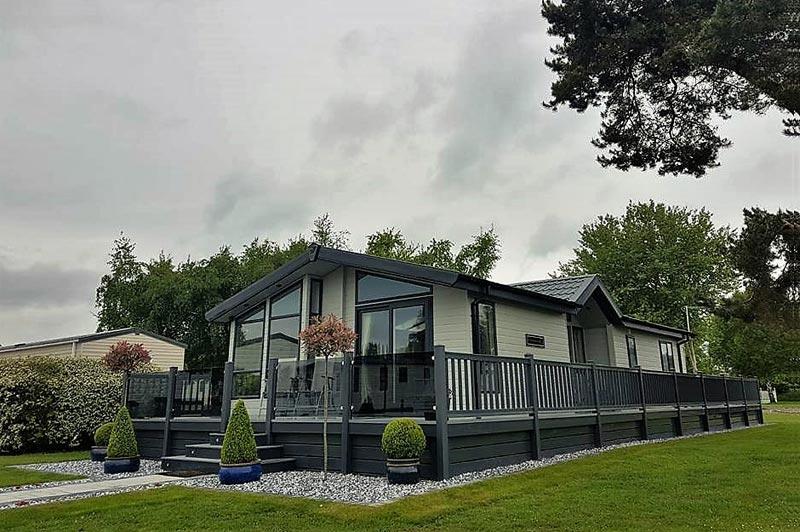
The uPVC balustrade remains one of the most practical choices for decking, particularly in static caravans, lodges, holiday parks and other residential outdoor areas. At Maple Plastics, this type of system provides a strong, safe and visually appealing finish for decking, with picket styles and colour options that allow it to coordinate with or contrast against the rest of the design.
Furthermore, the brand emphasises precisely what matters most to many customers: low maintenance and good durability in outdoor use. uPVC does not rot, warp or splinter like wood and does not require the seasonal maintenance typical of painted timber. This makes it a more practical choice for those who want to spend more time using the space than maintaining it.
The downside is that, in highly architectural or minimalist designs, uPVC rarely offers the same visual sophistication as glass balustrades or stainless steel with glass.
Glass With Stainless Steel Posts and Clamps
If the priority is to strike a balance between modernity, structure and visual openness, glass combined with stainless steel is usually a very safe choice. The stainless steel posts and clamps give the railing system a clear structure without blocking the view, and Maple describes its stainless steel balustrade system as durable, low-maintenance and cost-effective, available with pre-assembled posts and compatible with glass panels or wire infill.
Grade 316/316L is essential for outdoor, coastal or high-pollution environments, whilst 304 and 316 are suitable for different installation contexts. This type of solution works very well on balconies, terraces, decking areas and staircases. It has a contemporary look, but is not as invisible as frameless glass.
This can be an advantage. The vertical posts create a more defined sense of space, provide a sense of structure and, in many projects, facilitate installation, modifications and maintenance. For those who want unobstructed views but do not insist on a completely frameless look, this often offers the best balance between aesthetics, strength and budget.
Frameless Glass Balustrades With Aluminium Channels
For a project aiming for a light, open and premium look, frameless glass balustrades remain the benchmark. These systems offer unrestricted views, maximum light penetration and a striking contemporary finish, with flexibility of application thanks to their modular design.
In today’s market, the most common approach involves frameless glass secured by aluminium profiles or base channels; in other words, the glass takes centre stage whilst the structure remains more discreet. That is where much of their aesthetic appeal comes from, and it is precisely here that the difference between a beautiful balustrade and the right balustrade becomes apparent.
Frameless glass offers exceptional aesthetic appeal, enhances the sense of space and works particularly well on balconies, terraces and contemporary outdoor projects. At the same time, it requires extra attention to specification, glazing, fixing method and compliance, because the beauty of the system depends on a sound engineering package behind it.
Composite Railing
Composite railings deserve to be included in this comparison because they meet a genuine market need: customers who want a look that matches composite decking and requires less maintenance than timber. The Hybrid Composite Railing is a modern solution, offering an exact colour match with other products in the range, a 25-year guarantee against fading and staining, and is recommended for use on low-level residential decks.
This means that composite railing can be excellent in certain scenarios, but should not be treated as a universal solution for any balcony or elevated staircase.
The product is suitable for low-level residential decks, where the customer values visual consistency, the aesthetic appeal of modern timber and low maintenance. For elevated applications, the decisive factor is always the compatibility of the specific system with safety requirements and project approval.
Which Option is Best for Different Project Types?
For decks and terraces, the choice is usually between uPVC, glass with stainless steel, and frameless glass. If the project is designed for low maintenance, uPVC is very competitive. If the view is a key consideration and the client wants a modern, robust solution, stainless steel with glass panels usually offers an excellent balance. If transparency and sophistication are the absolute priority, frameless glass balustrades tend to be the preferred option. In every case, the system still needs to offer protection and help prevent falls without compromising the look of the outdoor space.
For staircases, the discussion shifts slightly. Here, the handrail becomes a key consideration, and systems featuring stainless steel or well-specified glass are often particularly robust. Post and clamp glass balustrade systems are common in mezzanine and staircase applications, which makes sense when aiming to combine safety, a clear structural profile and a contemporary look. This is especially important around the landing and beside the staircase, where people walk and where support and guarding have to work together.
For balconies and Juliet balconies, height, glazing specifications and fixing methods need to be considered more carefully. Glass is often sought after because it allows light in and does not visually obstruct the façade; for this reason, both glass with stainless steel and frameless glass are popular choices. However, in an exposed outdoor environment, the choice of material remains crucial, and this is where Maple’s recommendation for 316-grade stainless steel for outdoor and coastal exposure carries significant weight. In these locations, the balustrade is fundamentally a fall protection system, so the fixing method, material grade and safety requirements matter just as much as the visual finish.
As for caravan decking, lodges and holiday home settings, uPVC retains a very clear advantage. Maple Plastics offers systems that help create usable space, with a good visual finish, robustness and simple maintenance. It is exactly the type of product that makes sense for those who want to enjoy the outdoor space without turning the project into a constant maintenance commitment.
Why Choose Maple Plastics
Maple Plastics is the ideal choice for this type of project because it does not rely on a one-size-fits-all solution. The company supplies uPVC decking, balustrades, railings, fencing and other outdoor solutions, with a clear focus on low-maintenance outdoor living, and offers a range of products from uPVC to stainless steel and glass balustrades. This is important because it allows you to choose the material based on the project, rather than forcing the project to fit a single material.
Furthermore, Maple highlights commercial benefits for both the end customer and the trade. Stockholding with nationwide delivery, support with layout choices and custom sizing, bespoke glass options, and a focus on products designed for durability and low maintenance. The company offers glass in custom sizes, laminated versions and various tints; it highlights stock for nationwide delivery and a strong commitment to UK-manufactured products wherever possible.
Summary
If your priority is the view, natural light and a cleaner, contemporary finish, frameless glass balustrades are usually the best choice. If you want a modern look with visible structure, excellent durability and great versatility, glass with stainless steel is a very strong option.
If you’re looking for a more practical choice for decking, lodges, caravans and other outdoor areas requiring minimal maintenance, uPVC balustrades remain hard to beat. And if the aim is to coordinate the railing with composite decking on a low-level residential deck, composite railings are well worth considering.
Ultimately, distinguishing between balustrades and railings helps to clarify the discussion. But to choose the right system, what matters most is where it will be installed, who will be using the space, how effectively it needs to prevent falls, how much maintenance you are willing to accept, and what level of visual openness you wish to achieve. Once these four points are clear, the best solution usually becomes quite obvious.
FAQ
Railing is a more general term for a safety barrier or support system. A balustrade refers more specifically to the complete system comprising balusters or infill, a top rail and a protective structure.
Yes, provided they are correctly specified, installed and suitable for the location. These systems are used precisely because they combine safety, transparency and a contemporary look, but the design must comply with the applicable requirements for guarding, glazing and fixing.
It depends on the application. For stairs, Approved Document K in England deals specifically with handrails and their heights, and allows the handrail to form the top of the guarding where the heights coincide. For balconies and other situations, the answer depends on the system and the approval of the design.
Yes. It is particularly suitable for residential decking, caravans, lodges and holiday settings, as it combines low maintenance, good outdoor durability and installation designed for this type of use.
In many cases, glass balustrades are a very strong choice for Juliet balconies, as they help maintain light and a more open appearance.
No. It is an attractive solution, particularly for low-level residential decks, but should not be assumed to be suitable for any application at height without confirmation of the specific system and the project’s compliance requirements.
